
Dynamic Sharding for Elastic Scalability
Dynamic Sharding for
Elastic Scalability
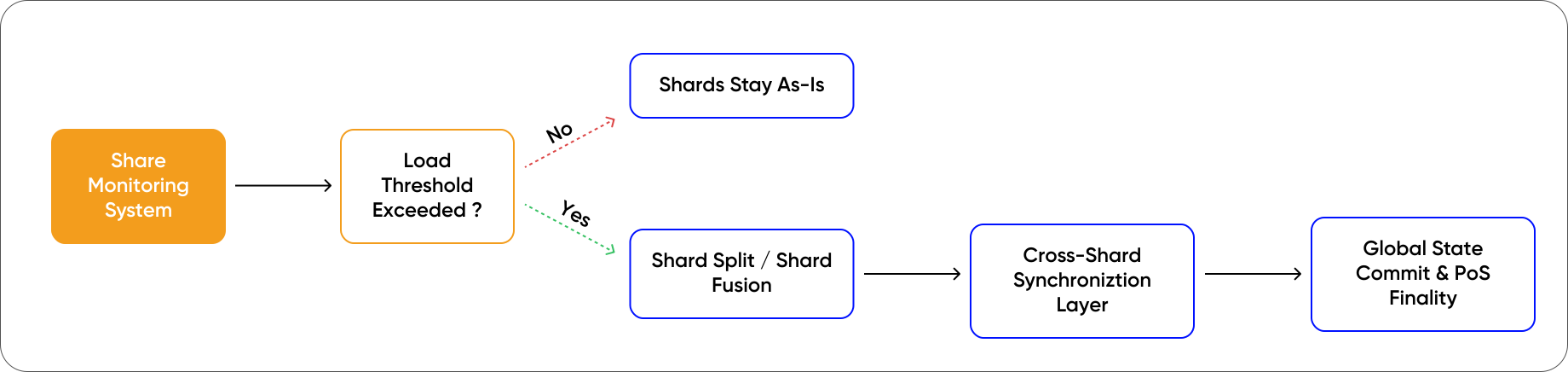
Shards split and merge in real time on BitNetChain, keeping the network secure, decentralized, and flexible.
Dynamic Shard Scaling
Parallel Execution Engine Integration

Tendermint PoS with BFT finality
Fast, deterministic finality with broad validator participation and decentralization.

Consensus aligned with Dynamic Sharding
After cross-shard synchronization, validators commit the global state, finalizing shard splits, merges, and cross-shard transactions in under 600ms.
- •Near-instant confirmations (<600ms finality)
- •Ultra-low fees (<$0.00001)
- •Stable performance during traffic spikes
- •No manual shard assignment or routing
- •Atomic cross-shard calls by default
- •Consistent global state views for dApps
What is Dynamic Sharding?
Dynamic Sharding is BitNetChain’s adaptive sharding system, automatically adjusting shard count and size based on network load instead of using a fixed layout.
Does Dynamic Sharding affect decentralization or security?
No. Shards operate on top of a Tendermint PoS + BFT consensus layer, preserving validator participation, security, and decentralization.
What performance can applications expect?
With Parallel Execution and Dynamic Sharding, BitNetChain achieves 50,000+ TPS with sub-600ms block times, supporting high-frequency DeFi, NFT, and gaming workloads.
How does Dynamic Sharding work with the Parallel Execution Engine?
The engine distributes transactions across threads, while Dynamic Sharding adjusts the number of shards and threads. Together, they allow horizontal scaling without sacrificing finality or user experience.
How is it different from static sharding?
Static sharding defines shard boundaries upfront, often causing imbalances as traffic fluctuates. BitNetChain splits busy shards and fuses underutilized ones to maintain throughput and resource efficiency.
How are cross-shard transactions atomic?
A cross-shard synchronization layer coordinates state changes and commits only when all dependent updates are ready, ensuring atomicity and consistent global state.
Do developers need to manage shards?
No. Developers write smart contracts and dApps as if interacting with a single global chain; shard placement, splitting, and cross-shard calls are handled automatically.
A Layer 1 blockchain for scalable, secure, and programmable networks.


